
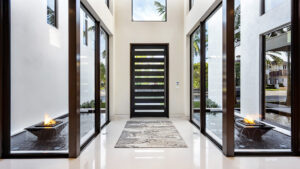
On a summer night in Juno Beach, the dunes are supposed to be dark. Hatchling sea turtles find the ocean by heading toward the brightest horizon, and on a natural beach that’s the moonlit water. A glowing window or a lit glass door facing the sand can pull them the wrong way. In a town with one of the densest sea turtle nesting beaches in the world, the glass in your doors is part of that picture.
That’s why choosing glass door inserts in Juno Beach involves a little more thought than it does inland. We install new glass in the doors you already have, usually in one visit of an hour or two, and we can help you pick glass that keeps light spill down while still brightening your entry. Questions about your own doors? Call (352) 862-4122.
Why a lit doorway matters on a nesting beach
Sea turtle nesting season in Palm Beach County runs from March 1 through October 31. The Loggerhead Marinelife Center in Loggerhead Park, right by the Juno Beach Pier, tracks many thousands of nests along this stretch of coast each year. Adult females also avoid brightly lit beaches when they come ashore to nest.
Most people think about porch lights and pool lights. Wildlife officials point out that interior lights are often brighter than anything outside, and they escape through any clear glass that faces the beach. A glass door off an oceanfront living room, or a condo door onto a beach-side balcony, can throw a lot of light onto the sand after dark.
Tinted, frosted and clear: how much light each one lets out
This is where the type of glass makes a real difference. Clear glass lets nearly all your interior light straight through. Frosted or textured privacy glass scatters that light, so you see a soft glow instead of a sharp beam, but it doesn’t always cut the total amount by much. Tinted glass is the one that actually reduces how much light passes through.
Florida’s wildlife agency recommends tint that lets through less than half of the light on beach-facing glass, windows and doors alike, along with closing blinds or curtains at night. For a door, the most effective choice is often gray-tinted, impact-rated glass, sometimes called turtle glass. We’ll bring samples and product details so you can compare how much light each option transmits, not just how it looks.
Glass door inserts in Juno Beach and the town’s lighting rules
The Town of Juno Beach has its own sea turtle lighting rules, and they cover windows and doors on property near the beach. What applies depends on where your home is and whether the door can be seen from the sand. Before you order new glass for a beach-facing door, read up on the town’s lighting rules, and check with your condo association if you have one, so you know exactly what’s expected.
We’ll give you the glass specifications at the free estimate, including how much light each option lets through. Homes farther back, west of U.S. 1 or around Pelican Lake, are less likely to have a door facing the sand at all. Even so, some owners there like lower-glare glass for the softer light at night.
Keeping the house bright by day without lighting up the dunes
Nobody wants a dim house to protect the beach, and you don’t need one. Start by sorting your doors. A front door facing the street or a parking lot usually isn’t visible from the sand, so clear or lightly textured glass may be fine there. The doors that deserve careful choices are the ones on the ocean side of the house.
On those doors, size is a useful lever. A smaller lite, such as a half-lite or a narrow center panel, lets in plenty of daylight while leaving less glass to glow at night. Pairing tinted glass with a light-colored frame keeps the door from looking heavy. Glass with enclosed blinds sealed between the panes is another option, since the blinds tilt fully closed after sunset and there are no cords to manage. Either way, the door does its part without making the room feel closed in.
Condo entries, oceanfront homes and the streets inland
Juno Beach has two distinct kinds of housing. Along A1A, most people live in condo and high-rise buildings facing the ocean. Inland, the streets south of Donald Ross Road carry names of planets and Roman gods, given by the local garden club back in the 1950s, and they’re lined with midcentury houses and newer builds.
Condo owners usually need to work within association rules on the style of entry doors and any glass facing the beach. Single-family owners have more choice, but their back doors, often opening onto a pool deck or Florida room, are the ones most likely to face the ocean. Pool-side rooms often suit our cabana and pool-bath door glass, which uses obscure patterns for privacy. Browse our gallery of finished doors to see the range, from simple privacy glass to decorative glass inserts.
Salt, sun and storms by the ocean
The town sits on a narrow strip between the Atlantic and the Intracoastal, with the Juno Dunes Natural Area stretching from beach to waterway. Salt spray rides the onshore breeze and slowly pits exposed metal. For beach-side homes, we suggest inserts with the decorative metal sealed between the panes and frame finishes made for coastal air.
By day, the same tinted glass that helps turtles at night also cuts glare, and Low-E glass reflects much of the sun’s heat before it reaches your foyer. For storms, Palm Beach County is a wind-borne debris region where qualifying products carry Florida Product Approval. Impact glass door inserts are available, but the rating belongs to the glass, lite frame and door tested together, so an insert doesn’t make an existing door storm-rated on its own. At the estimate, we’ll tell you honestly what fits.
What install day looks like here
Install is a single visit, usually an hour or two per door. Trim stays in place, nothing needs repainting, and your doorway is closed up again the same visit. If you’re in a condo, we’ll work around the building’s rules for contractors and elevator use. You can walk through each step in our install process walkthrough. Many owners like to finish before the season starts on March 1, so the new glass is in place for the whole nesting season.
Neighbors up and down the coast
We serve all of north county. Just north, we install glass door inserts in Jupiter, and a little farther up you’ll find us in the village of Tequesta. To the west, we work across Palm Beach Gardens, and to the south we cover North Palm Beach and Lake Park. See every city on our full South Florida service map.
Beach-side questions we hear in Juno Beach
Does frosted glass keep light off the beach at night?
Frosted glass softens and scatters light, but it doesn’t reduce the total amount as much as people expect. Tinted glass is what cuts how much light gets through. For a beach-facing door, gray-tinted turtle glass, which is also impact-rated, is usually the better choice.
Does the town have rules about glass on beach-side doors?
Yes. The town’s sea turtle lighting rules cover windows and doors on property near the beach. Read up on them before ordering, and check with your condo association if you’re in one. We’ll give you the glass specifications to share with them.
When is sea turtle season in Juno Beach?
In Palm Beach County, nesting season runs from March 1 through October 31. Scheduling door work before March means the new glass is in place all season.
Can you put tinted glass in a condo entry door?
Often, yes, but condo associations usually have rules on the look of entry doors. Check yours first, and we’ll bring options that fit those rules to the free estimate.
Will my door work with a new insert?
Most exterior doors can, and a quick look during the free estimate settles it for yours. Ring us at (352) 862-4122 to book one.
Better glass for dark beach nights
If you’d like new door glass that brightens your home by day and keeps light off the beach at night, we’d be glad to help. Book a free estimate and we’ll bring tinted and privacy options and quote your glass door inserts in Juno Beach. You can call (352) 862-4122 or ask for a quote online.