
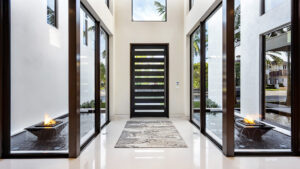
Two glass samples can look almost identical in a catalog photo and completely different once they’re held up against your front door. One lets you read the house numbers across the street. The other turns the same view into soft color and light. Most homeowners shopping for glass door inserts in South Miami already know the size and shape they want. The texture is where they get stuck, and it’s the choice that decides how the door feels to live with every day.
We install new glass in the exterior doors you already have, in one visit, usually an hour or two, with the trim and paint untouched. If you’d like to talk through textures before we come out, call (352) 862-4122.
Why texture matters more than most people expect
Texture controls three things at once: how much of the outside you see, how much of the inside other people see, and how the light spreads once it’s through the glass. Clear glass throws a sharp patch of sunlight on the floor. A heavy texture scatters that same light across the whole entry, so the hall looks brighter but you can’t make out shapes through it.
It also changes how the door ages. Clear glass shows every water spot from the sprinklers and every fingerprint from little hands. Most textures hide that kind of wear, which is one reason they’re so popular on doors that get a lot of use. The pattern and the metal lines get the attention in the showroom, but texture is what you notice on an ordinary Tuesday.
The common textures, from see-through to fully private
Glass makers use a lot of trade names, but most options fall into a handful of families. Here’s how they compare in plain terms:
| Texture | What it looks like | How much you see through it |
|---|---|---|
| Clear | Plain, like a window | Everything, in both directions |
| Seeded | Clear glass with small trapped bubbles | Most of the view, slightly softened |
| Rain | Wavy vertical streaks, like water running down a pane | Blurred shapes and color |
| Reed | Narrow vertical ribs | Movement and color, no detail |
| Glue chip | A frosty, fern-like surface pattern | Light and very soft shapes |
| Frosted | An even, smooth matte finish | Light only |
Each design also carries a privacy rating of Low, Medium, High or Max, which makes side-by-side comparisons easier. Decorative glass inserts often mix two or three of these textures in one panel. A common design uses clear beveled pieces as accents, with a rain or glue chip background behind them. The bevels catch the sun and sparkle, while the textured background keeps the overall privacy level where you want it.
Picking a texture for glass door inserts in South Miami
Start with where your door faces and what’s across from it. A lot of South Miami homes sit close to the street on regular, walkable blocks, like the ones between Red Road and US 1, and plenty of front doors look straight at a neighbor’s front door. If that’s you, seeded glass will probably feel too open, and something in the rain or reed range is a better balance.
Homes set farther back, or screened by a hedge or a big shade tree, can get away with lighter textures. The leafy stretches along Sunset Drive west of downtown are a good example. With that much green between the door and the sidewalk, some owners go with seeded glass so they can still see who’s coming up the walk. The same goes for houses that back onto a park, such as the streets around Fuchs Park and its duck pond.
Then think about which way the sun hits. Frosted and heavily textured glass diffuses harsh afternoon light, so a west-facing entry won’t get that bright stripe across the tile. If glare is the problem more than privacy, ask about Low-E glass, which has a thin coating that cuts the heat coming through the pane. It pairs well with most textures.
What the texture looks like after dark
This is the part nobody shows you in the brochure. During the day, the outside is brighter than your entry, so textured glass hides the inside well. At night that flips. With the foyer lights on, anyone outside is looking into the brighter space, and light textures like seeded glass will show a clear picture of the room.
Rain and reed glass turn a person inside into a blurry shape. Glue chip and frosted glass reduce them to a soft glow. If your door opens onto a living area where you spend evenings, pick the texture based on how it looks at night, not in the afternoon. We bring samples to the estimate so you can see them against your own door and your own lighting.
Matching the texture to the house you have
South Miami has a real mix of homes. There are 1950s ranch houses and bungalows, midcentury modern designs with flat roofs and long lines, and newer contemporary builds where an older house used to be. In Cambridge Lawns, the historic district near the University of Miami, you’ll see Tudor Revival and Mediterranean Revival homes from the late 1920s.
Texture helps a door fit its house. Reed glass suits midcentury and contemporary homes, because the straight vertical lines echo the architecture. Glue chip, seeded glass and beveled clusters feel right on older Mediterranean and Tudor-style houses, where a bit of old-world character is the point. Plain frosted glass is the safest choice when you’re unsure, since it works with almost any style.
If the house already has sidelites or a transom, we’ll help you choose door glass that goes with them. The texture doesn’t have to match exactly, but the privacy level should feel consistent so the entry reads as one piece. You can browse finished doors in our gallery of front door glass inserts to see how different textures look on real homes.
Texture choices for the back, side and garage doors
Front doors get most of the attention, but the other doors around the house usually need a different texture. A side or service door that faces a neighbor’s driveway almost always calls for frosted or glue chip glass. It lets light into a laundry room or hallway without giving the neighbors a view.
Pool-bath doors are the clearest case for full privacy. Cabana door glass should let plenty of light through, but no one should be able to see in once someone’s inside. Frosted or heavy textures do that well. Our cabana and pool bath door page has more on those.
Garage door glass inserts are a different story again. Most people want light in the garage and a little curb appeal, but not a view of the car, the tools and the storage shelves. A light rain or seeded texture along the top row of panels is usually the sweet spot.
Impact glass and texture: what’s available
Miami-Dade has the toughest hurricane standards in the country, and storm products sold here are tested and carry Miami-Dade approval. Impact glass door inserts use laminated glass, where a clear layer holds the pane together if it breaks. Many textures and decorative patterns come in impact-rated versions, though the selection is usually narrower than standard tempered glass.
One thing to know up front: the impact rating applies to the whole tested assembly, meaning the glass, its frame and the door together. New glass on its own doesn’t turn an existing door into a hurricane-rated door. At the estimate, we’ll check your door and tell you which impact options fit it, so you can compare textures within what actually works.
Other cities around South Miami we visit
We work all through this corner of Miami-Dade. Next door, we install glass door inserts in Coral Gables, where many homes have that same Mediterranean look. To the south, we’re often in Pinecrest and on the bigger lots in Palmetto Bay. Heading north, we cover homes across the City of Miami and the quiet streets of Miami Springs. For the full list, see all the South Florida areas we serve.
Glass texture questions from South Miami homeowners
Which texture gives the most privacy without making the entry dark?
Frosted glass blocks the view completely but still passes a lot of daylight, because it spreads the light rather than stopping it. Glue chip is close behind and adds a bit more character. Both keep a South Miami entry bright, even on a block where the houses sit close together.
Can I see the textures in person before I decide?
Yes. We bring samples to the free estimate so you can hold them up to your own door and see how each one handles your light and your view. It’s much easier to decide that way than from photos.
Will textured glass be harder to keep clean?
Usually it’s the opposite for everyday marks, since textures hide water spots and fingerprints that stand out on clear glass. Deep patterns can hold dust in the grooves, so a soft brush or microfiber cloth works better than a paper towel. Plain glass cleaner is fine for most finishes.
Does a house in Cambridge Lawns need a particular style of glass?
We can’t speak for any association’s rules, so check whether your street has design guidelines before you order. Style-wise, glue chip, seeded glass and beveled accents tend to suit the Tudor and Mediterranean Revival homes there. We’ll bring options that fit the architecture.
Can you put glass in a door that’s never had any?
We can install glass door inserts in most exterior doors, including many that are solid today. A free estimate confirms whether yours is a good candidate. Call (352) 862-4122 to set one up.
Hold the samples up to your own door
Texture is easier to judge in person than on a screen, and that’s true of glass door inserts in South Miami more than most places, with so many styles of house sharing one small city. We’ll bring a range of options to your free estimate, show you how each one handles your entry’s light and privacy, and give you clear pricing on the ones you like. The install itself is one visit, and you can see how it works on our installation process page. To book yours, call (352) 862-4122 or send us a quote request and tell us which doors you have in mind.